Blood pressure is also affected by various hormones of the neuroendocrine system, particularly norepinephrine (noradrenalin), epinephrine (adrenalin), and cortisol (see dashed lines in Figure 1.2). Stimulation of the sympathetic nervous system leads to the release of the catecholamines, epinephrine and norepinephrine, from the adrenal medulla and of the corticosteroid, cortisol, from the adrenal cortex.

Unlike the immediate action of the autonomic nervous system described above, the neuroendocrine response is a little slower. In contrast to the direct neural pathways of the autonomic nervous system to the various elements of the circulatory system, the neuroendocrine response relies on the circulatory system itself to transport hormonal secretions to various target organs and receptors.
Norepinephrine generally results in increased vasoconstriction while epinephrine results in the dilation of vessels adjacent to muscle cells. Both epinephrine and norepinephrine increase heart rate. During a bout of exercise, epinephrine exerts a significant vasodilatory effect on the blood vessels associated with the skeletal muscles. Corticosteroids, including cortisol, also have an effect on blood pressure. Without the presence of cortisol, the influence of epinephrine and norepinephrine upon vascular responses is minimized (Drew and Leach, 1971). Therefore, cortisol facilitates the action of the catecholamines.
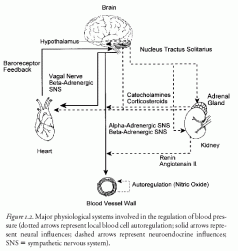
Renin, a humoral substance produced in the kidneys, also influences blood flow by converting angiotensin to angiotensin II, another vasoconstrictive hormone. Angiotensin II then signals the adrenal cortex to secrete aldosterone, which causes the body to retain sodium.
Sodium retention causes the body to retain fluid, resulting in an increase in blood volume and thus increased blood pressure. There are numerous other hormones that affect blood pressure, operating as either vasoconstrictive or vasodilatory agents. The reader is referred to a full description of them in Kaplan (2002).