On March 17, 2020, the American College of Cardiology (ACC), the American Heart Association (AHA), and the Heart Failure Society of America (HFSA) issued a joint statement urging researchers to address certain gaps in our understanding of COVID-19 risk.
Among the 8,910 COVID-19 patients admitted to 169 hospitals in Asia, Europe, and North America who had either died in the hospital or survived to hospital discharge, in-hospital death was not significantly more likely for the 6.2% on angiotensin receptor blockers at admission (6.8% vs 5.7% among controls, OR 1.23, 95% CI 0.87-1.74).
The 8.6% on ACE inhibitors at admission were actually less likely to die than were other COVID-19 patients (2.1% vs 6.1%, OR 0.33, 95% CI 0.20-0.54), Mandeep Mehra, MD, of Brigham and Women’s Hospital in Boston, and colleagues reported.
A secondary analysis of only patients with an indication for a RAAS drug due to having hypertension likewise showed no evidence of harm.
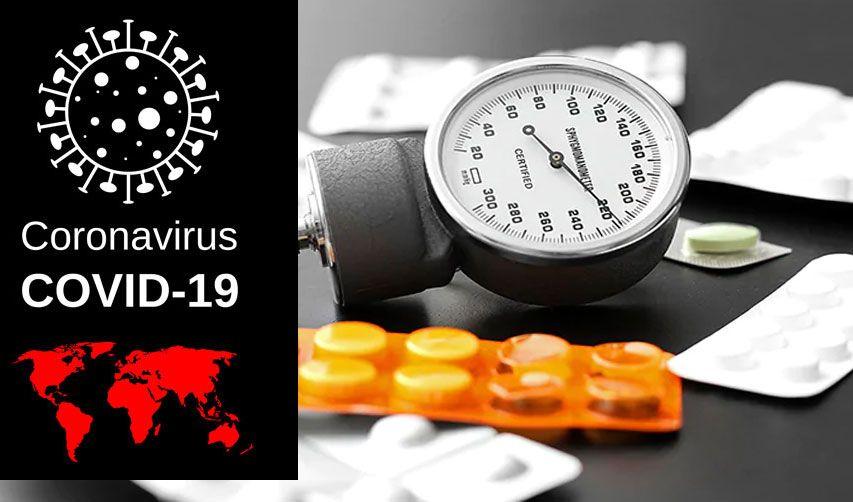
More specifically, the ACC, AHA, and HFSA pointed out a need to clarify whether or not people who have taken antihypertensive medication — that is, the drugs that help lower blood pressure — are at higher risk of developing COVID-19 or experiencing a severe form of the disease.
Patients with underlying cardiovascular diseases appear to have an increased risk for adverse outcomes with coronavirus disease 2019 (COVID-19). Although the clinical manifestations of COVID-19 are dominated by respiratory symptoms, some patients also may have severe cardiovascular damage. Angiotensin converting enzyme 2 (ACE2) receptors have been shown to be the entry point into human cells for SARS-CoV-2, the virus that causes COVID-19. In a few experimental studies with animal models, both angiotensin converting enzyme (ACE) inhibitors and angiotensin receptor blockers (ARBs) have been shown to upregulate ACE2 expression in the heart. Though these have not been shown in human studies, or in the setting of COVID-19, such potential upregulation of ACE2 by ACE inhibitors or ARBs has resulted in a speculation of potential increased risk for COVID-19 infection in patients with background treatment of these medications.
According to the World Health Organization (WHO), an estimated 1.13 billion people worldwide have high blood pressure (hypertension), which antihypertensive medications can help control.
If there was any indication that such drugs might contribute to a person’s risk of developing COVID-19 or causing a severe form of the disease, this would be deeply concerning for medical professionals worldwide.
Recently, investigators from the NYU Grossman School of Medicine in New York City and collaborating institutions conducted a study that aimed to settle this issue.
The research – which now appears in The New England Journal of Medicine — draws a reassuring conclusion: There is no association between the common blood pressure drugs included in the study and the risk of COVID-19.
In their study, the researchers focused on a class of drugs called renin-angiotensin-aldosterone system inhibitors.
Particularly, they looked at angiotensin-converting enzyme (ACE) inhibitors, angiotensin receptor blockers, beta-blockers, calcium channel blockers, and thiazide diuretics.
The ‘findings should reassure’ doctors
Researchers had been wondering about the potential effect of ACE inhibitors on COVID-19 risk because they interact with the protein ACE2, which is involved in blood pressure regulation.
However, recent investigations have also shown that ACE2 also mediates the entry of SARS-CoV-2 into lung cells, leading to their infection. This has prompted scientists to ask if people with hypertension might have a higher risk of COVID-19.
These theoretical concerns and findings of cardiovascular involvement with COVID-19 deserve much more detailed research, and quickly. As further research and developments related to this issue evolve, we will update these recommendations as needed.
In the recent study, the researchers assessed the data of 12,594 individuals who underwent testing for COVID-19. Of these, 5,894 (46.8%) had positive tests.
Of those who tested positive, 1,002 (17%) experienced a severe form of the disease.
In looking at the participants’ medical history, the researchers found that 4,357 also had hypertension. Of these, 2,573 tested positive for COVID-19, and of those, 634 experienced severe symptoms.
However, when assessing for potential links between medication history and the likelihood of testing positive for COVID-19, the researchers found “no association between any single [antihypertensive] medication class and an increased likelihood of a positive test.”
Also, the investigators write that none of the blood pressure drugs they tested were tied to a significant increase in the risk of experiencing severe COVID-19.
“With nearly half of American adults having high blood pressure, and [people with heart disease] more vulnerable to COVID-19, understanding the relationship between these commonly used medications and COVID-19 was a critical public health concern,” explains lead investigator Dr. Harmony Reynolds.
Going forward, the investigators want to try to clarify whether or not other forms of medication might be tied to the development of COVID-19.
“Before our study, there were no experimental or clinical data demonstrating the consequences of using these medications one way or the other in people at risk [of] COVID-19,” says senior study author Dr. Judith Hochman.
“In terms of next steps,” she adds, “our plan is to use similar approaches to investigate other medications and their relationship to COVID-19 illness.”